The cosmetics industry has spent much of the last decade rethinking sustainability.
Packaging has become lighter, more recyclable, and in some cases refillable. Brands have invested heavily in responsible sourcing programs, ingredient traceability, and supplier engagement initiatives. Climate targets that were once rare are now increasingly common across the sector.
These changes matter. Yet many cosmetics companies are discovering that reducing emissions is considerably harder than measuring them.
For most brands, the majority of emissions sit beyond their direct operations. Ingredients, packaging components, and finished products are often produced through complex networks of suppliers operating across multiple countries and manufacturing environments. Progress on Scope 3 targets depends on changes taking place inside facilities that brands do not own and rarely control directly.
That creates an uncomfortable reality. Many of the sustainability initiatives consumers see are not where the largest emissions reduction opportunities sit.
Companies often need to look deeper into their supply chains and closer to the manufacturing processes that turn raw ingredients into finished products.
And in many cases, that means looking at heat.
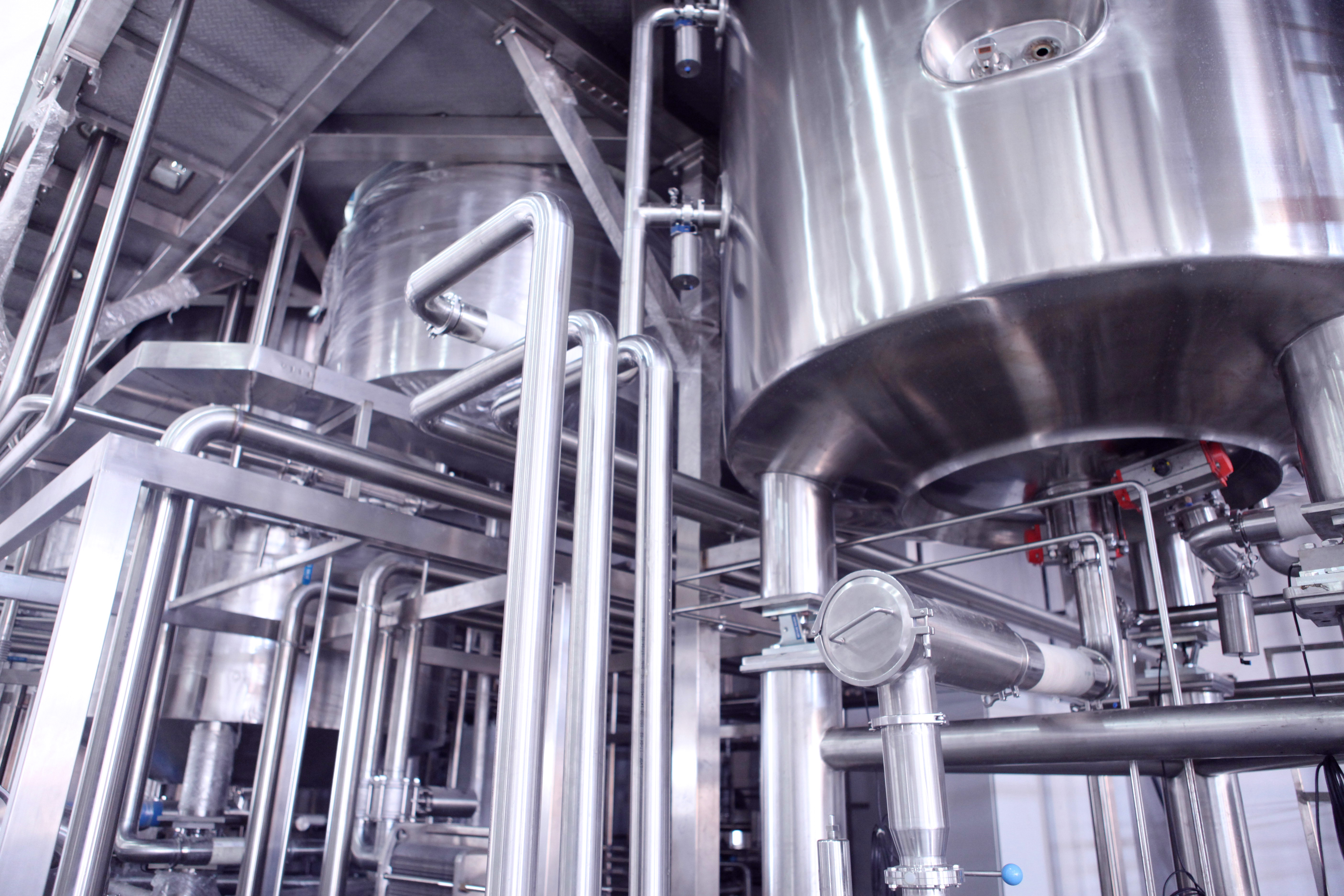
The manufacturing footprint behind beauty products
A beauty product may look simple on a store shelf. Manufacturing it is often anything but.
Before a moisturizer, shampoo, conditioner, serum, fragrance, or detergent reaches a consumer, ingredients must be processed, refined, blended, and stabilized. Formulations are mixed, heated, cooled, emulsified, and tested to achieve the texture, performance, appearance, and shelf-life consumers expect.
Production environments also need to be cleaned and sanitized between runs. Packaging components are manufactured separately before being filled, labeled, assembled, and distributed.
Many beauty brands rely heavily on contract manufacturers and specialist suppliers to perform these activities. A single product may involve ingredient suppliers, packaging manufacturers, formulation partners, filling facilities, and logistics providers spread across multiple countries.
As a result, some of the most important emissions decisions sit far beyond the direct control of the brand itself.
Research from the Zurich University of Applied Sciences identifies process temperatures, manufacturing methods, and production design as important drivers of energy consumption in cosmetics manufacturing. A separate study published in Cosmetics found that different emulsion manufacturing methods can lead to significantly different energy demands and carbon footprints, even when producing similar products.
Heat may not be the first thing people associate with beauty products.
But it is embedded throughout the manufacturing process.
Why supplier engagement alone rarely delivers reductions
The cosmetics industry has made significant progress in supplier engagement.
Many major brands now require suppliers to disclose emissions, report through CDP, and establish climate targets. One major beauty brand was worked with suppliers through the CDP Supply Chain program since 2007, with 790 suppliers participating in 2023, representing 85% of invited suppliers.
This has improved visibility across supply chains considerably.
Reducing emissions is a different challenge.
Many cosmetics suppliers operate facilities producing hundreds, sometimes thousands, of product variations. Production lines may switch frequently between formulations, fragrances, colors, and packaging formats. New product launches, seasonal collections, and changing consumer preferences can create additional operational complexity.
Under these conditions, manufacturing efficiency, product consistency, and production uptime often take priority.
A supplier may understand where emissions sit. That does not mean they have the expertise, resources, or investment capacity needed to redesign energy systems, evaluate alternative technologies, or implement major operational changes.
For many suppliers, the challenge is no longer understanding the problem.
It is finding a practical route to solve it.
Why manufacturing transitions stall
Most suppliers already recognize the need to reduce emissions.
What often slows progress is turning that ambition into operational change.
Heat decarbonization projects typically begin with understanding how thermal energy is used across a site. Which processes require hot water, steam, heating, cooling, drying, or cleaning? When do those systems operate? Which technologies could realistically replace or improve them?
The answers vary significantly between facilities.
A solution that works for one contract manufacturer may not work for another producing different formulations, operating different equipment, or working within different infrastructure constraints. Some facilities may benefit from electrification. Others may find opportunities through heat recovery, process optimization, or cleaner energy sources.
Every site presents a different technical and commercial challenge.
This is where many traditional supplier engagement approaches reach their limit. Reporting frameworks and target-setting initiatives improve visibility, but they do not necessarily provide suppliers with the engineering expertise, implementation planning, financing support, or operational guidance needed to move projects forward.
Few suppliers can coordinate all of those elements independently.
From supplier engagement to implementation
The next phase of cosmetics supply chain decarbonization will need to move beyond visibility and into implementation.
That means helping suppliers understand how heat is used across facilities, identify viable decarbonization pathways, evaluate investment requirements, and build credible plans for delivery.
Initiatives such as the Clean Heat Program, developed by Secaro in partnership with ERM, are designed to support that process.
The program helps suppliers:
- Understand their heat profile
- Identify viable decarbonization opportunities
- Build investment-ready business cases
- Access technical expertise
- Explore financing options
- Deliver projects without disrupting production
By combining supplier engagement, engineering expertise, and financing support, the program is designed to help suppliers move from emissions reporting into operational action.
For cosmetics companies pursuing Scope 3 reductions, that distinction matters. Collecting data helps companies understand the problem. Reducing emissions requires changes inside the facilities where products, ingredients, and packaging are actually made.
Turning beauty climate ambitions into manufacturing progress
The cosmetics industry has become increasingly sophisticated in how it measures and reports sustainability performance.
The next challenge is reducing emissions at scale.
That will require looking beyond the sustainability initiatives consumers see and paying greater attention to the manufacturing systems operating behind the scenes. Ingredients still need to be processed. Products still need to be formulated. Equipment still needs to be cleaned. Packaging still needs to be produced.
Those activities consume energy, and much of that energy remains tied to heat.
Packaging, ingredient sourcing, and product innovation will continue to play an important role in beauty sustainability strategies.
But some of the industry's most significant emissions opportunities may sit inside supplier facilities, hidden within the manufacturing processes that bring beauty products to life.