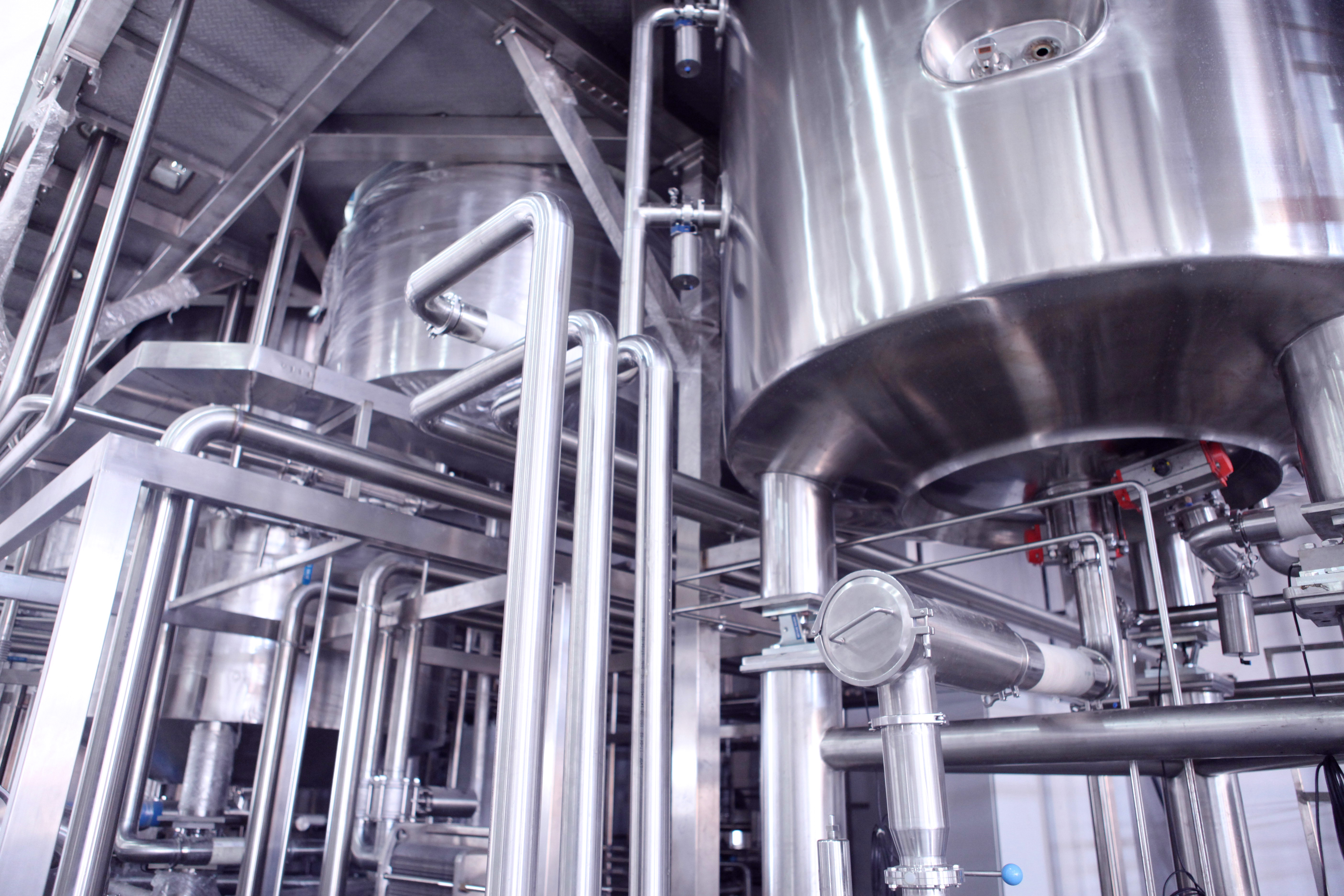
Most net zero strategies look convincing on paper. Targets are set. Roadmaps are drafted. Progress updates appear in sustainability reports. From the outside, the path to decarbonization can seem straightforward. Inside factories, the reality looks different.
Production lines run to tight schedules. Equipment is designed to operate continuously. Processes depend on precise temperatures and reliable energy supply. Changing any part of that system carries risk.
Large consumer goods companies feel this tension sharply. Many operate global manufacturing networks while also managing complex supplier ecosystems upstream. Decarbonizing supply chains means addressing emissions embedded deep inside production processes, both within their own operations and across suppliers.
Across the sector, companies are discovering that the hardest part of their climate strategy isn’t setting targets. It’s changing the systems that actually make their products.
And in many cases, the biggest barrier is heat.
Heat sits at the center of consumer goods production
Thermal energy underpins many of the processes that define consumer goods manufacturing.
In food and beverage production, ovens, dryers, and pasteurization systems are essential for processing and preservation. Spray drying is widely used to produce milk powders, coffee, and ingredients, while sterilization processes are critical for ensuring food safety and shelf life.
Personal care and household goods manufacturing also relies heavily on heat. Steam and hot water are used in formulation, cleaning, and chemical reactions during the production of detergents, surfactants, and soaps. Packaging production introduces further heat demand through polymer processing and material forming.
Energy studies consistently show how central thermal energy is to industrial production. The International Energy Agency estimates that heat accounts for roughly three-quarters of final energy use in industry, making it the dominant energy demand in most manufacturing environments.
Much of that heat still comes from fossil fuels.
In the UK food and drink sector, the Food and Drink Federation reports that around 97 percent of heat demand is currently supplied by fossil fuels, primarily natural gas.
Steam systems alone account for a large share of thermal energy demand in food manufacturing, powering cleaning systems, sterilization processes, and many production steps.
Decarbonizing consumer goods manufacturing therefore means confronting a simple reality. Many of the processes that underpin product quality, safety, and consistency still depend on fossil-fuel heat systems.
Production realities make heat difficult to change
Awareness of the problem is not the issue. Most sustainability teams understand that manufacturing emissions matter. Momentum tends to slow when organizations attempt to translate strategy into operational change.
Food, beverage, and consumer goods production environments leave little room for experimentation. Heat systems must deliver consistent temperatures for pasteurization, drying, and sterilization processes that protect product quality and safety. Reliability matters just as much as emissions reduction.
In manufacturing environments where production uptime is critical, the cost of unplanned downtime can quickly outweigh the financial benefits of energy savings. As a result, perceived technical risk often becomes a major barrier to heat decarbonization.
Investment decisions add another layer of complexity. Replacing boilers, electrifying processes, or installing new heat technologies often requires substantial capital. Evaluating options based on total cost of heat – including capital investment, operating costs, maintenance, and operational risk – is essential but not yet standard practice across the sector.
Large consumer goods companies also operate dozens or even hundreds of manufacturing facilities across different countries. Each site may use different production technologies, fuels, and infrastructure. A solution that works in one factory may not translate directly to another.
McKinsey highlights that industrial decarbonization efforts often stall at the implementation stage rather than the ambition stage. The bottleneck is not diagnostics; it’s execution under real production constraints.
The gap between strategy and implementation
Corporate climate commitments have accelerated rapidly across the consumer goods sector. Many companies now have science-based targets and long-term net zero ambitions.
Operational change often moves more slowly.
Manufacturing teams focus on uptime, safety, and product quality. Sustainability teams focus on emissions reductions. Finance teams weigh investment decisions against competing priorities. Aligning those perspectives around a single decarbonization project is rarely straightforward.
Heat decarbonization sits directly at the intersection of these priorities. Projects can stall when organizations lack clear visibility into site-level heat demand, viable technology pathways, or the financial implications of change.
Without those building blocks, delaying action can feel like the safest option.
Unlocking progress on heat
Breaking that pattern requires more than analysis. Decarbonizing heat typically begins with understanding how thermal energy is used across a site – which processes require steam, hot water, or high-temperature heat, and when those systems operate.
From there, companies need to evaluate viable technology pathways, build credible business cases, and access technical expertise capable of implementing solutions without disrupting production.
The International Energy Agency notes that decarbonizing industrial heat requires a combination of technology innovation, operational planning, and financial support to move projects from concept to implementation.
Some organizations are starting to approach the challenge through supplier-focused programs that bring these elements together.
The Clean Heat Program, developed by Secaro in partnership with ERM, works with large companies and their suppliers to help manufacturers understand their heat profiles, explore decarbonization options, and build investment-ready projects. Technical expertise, supplier education, and financing mechanisms are combined so that changes can be implemented without interrupting production.
Programs like these reflect a broader shift in how companies approach supply chain decarbonization. Moving from targets to action often requires structured support that bridges the gap between sustainability ambition and operational reality.
Turning ambition into action
Manufacturing emissions remain one of the most difficult parts of the net zero transition for consumer goods companies. Technologies capable of reducing fossil-fuel heat already exist, from electrified boilers to industrial heat pumps and alternative fuels.
The challenge lies in deploying them across complex production systems without compromising reliability, product quality, or financial performance.
Meaningful progress will depend on turning high-level climate strategies into practical projects that work on the factory floor.
For many consumer goods companies with global manufacturing footprints and complex supply chains, that journey starts with understanding – and ultimately transforming – how heat is produced and used.