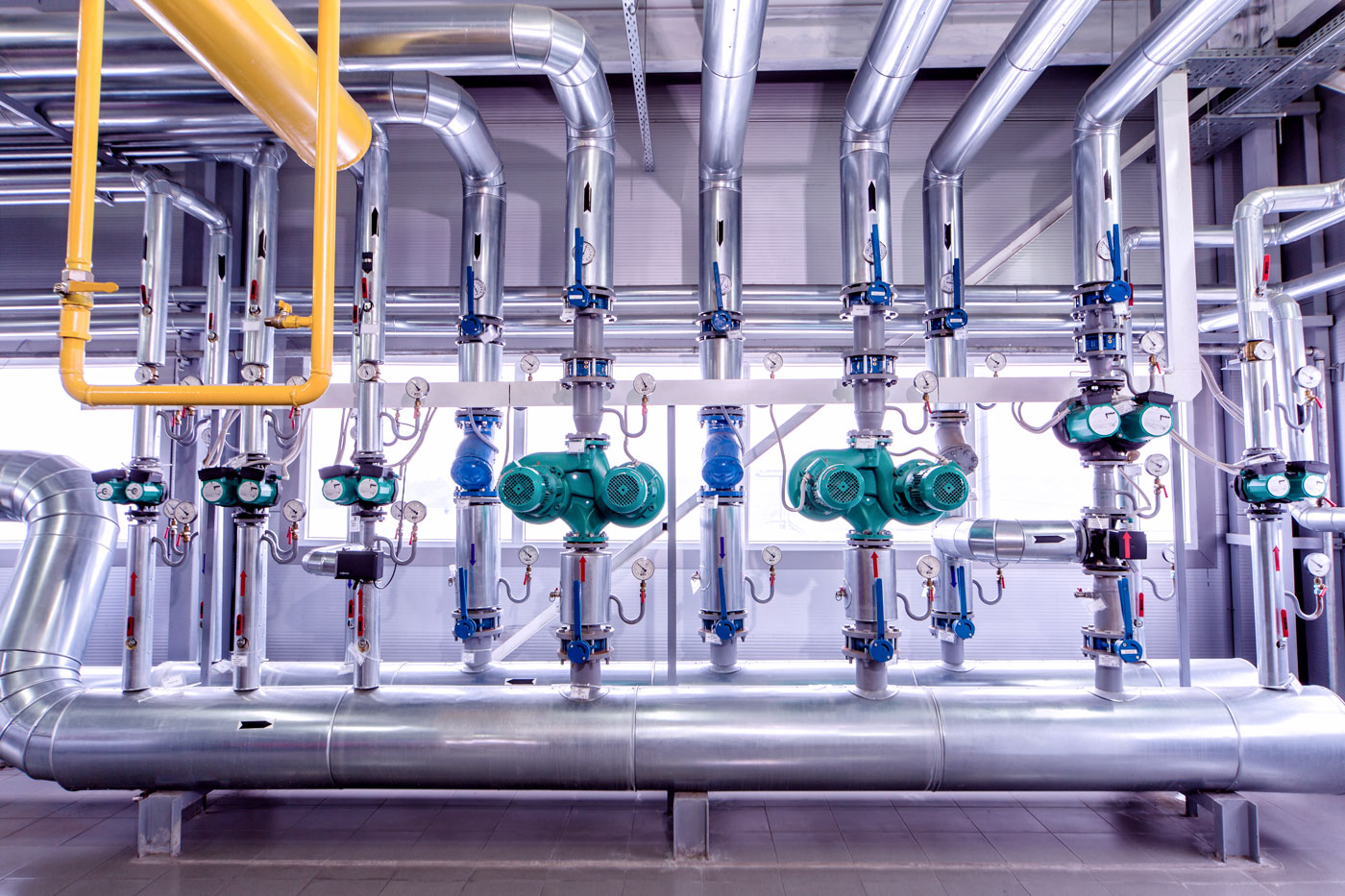
For years, industrial heat has been described as “hard to abate.” The phrase has a powerful effect on how the problem is perceived. It suggests complexity, technical specialization, and constraints that feel like engineering limitations.
But when companies look closely at how heat is actually used across their supply chains, the viewpoint starts to unravel. In many sectors, demand is dominated by steam and hot water. Temperature requirements are often low to medium. And workable pathways already exist.
The real difficulty is not whether heat can be decarbonized. It is whether organizations are set up to execute – site by site, under real operational and financial constraints.
This is why progress on heat so often looks like action without impact. Plans are made, roadmaps are published, and yet the underlying sources of emissions change slowly, if at all. The gap is rarely one of intent. It is one of execution.
Heat dominates supply chain emissions where ambition is high
Across manufacturing supply chains, heat remains one of the largest and most persistent sources of emissions at the facility level, often representing the dominant share of Scope 1 emissions.
In AstraZeneca’s API supplier base, around 80% of facility emissions sit in Scope 1, driven primarily by direct fuel combustion. Natural gas alone accounts for roughly 60% of those Scope 1 emissions.
What makes this particularly striking is that these emissions persist even where ambition is clearly established. In the same supplier base, most facilities had already set science-based Scope 1 and 2 targets. Which means targets are not the constraint.
And yet ambition is not translating into action on heat. Nearly 90% of emissions were associated with facilities that had not yet developed a heat-specific action plan, despite widespread reporting and engagement.
This gap between intent and execution is not an anomaly. It is structural.
The myth that heat is “too difficult” doesn’t hold up
Heat is often framed as uniquely challenging because it is assumed to be high-temperature, process-critical, and dependent on future technologies. But supplier analysis tells a more nuanced story.
From site-level research and 14 supplier interviews run by Secaro, most heat demand was found to sit in low-to-medium temperature ranges, dominated by steam and hot water. These are fundamental to manufacturing operations and technically addressable with mature, commercially available solutions.
This does not mean heat is simple. But it does mean that the bottleneck is not the absence of viable technologies. The problem lies elsewhere.
Where clean heat really gets stuck
Clean heat rarely stalls because suppliers don’t care or don’t see the opportunity. It stalls because execution breaks down at the point where decisions become operational and financial.
At the site-level, heat decarbonization decisions intersect with asset lifecycles, shutdown windows, regulatory approvals, and production risk. Suppliers face a long list of theoretical options but limited capacity to narrow them down to one or two viable pathways that fit their specific constraints.
Across interviewed suppliers, access to capital and the ability to demonstrate ROI emerge as the most decisive barriers to decarbonizing heat. Live polling at the Scope 3 Peer Group’s clean heat workshop reinforced this pattern, with funding and financial incentives cited more frequently than technology readiness or policy uncertainty.
This is not reluctance. It's risk management.
Why reporting alone doesn’t unlock heat
Most Scope 3 programs were designed to answer an earlier question: where are emissions coming from? They have been highly effective at improving visibility and accountability.
But heat exposes the limits of a reporting-first operating model.
Across the research, roughly half of facilities reported having some form of plan to reduce heat-related emissions. In most cases, those plans focused on incremental measures such as efficiency improvements, waste heat recovery, and optimization of existing systems.
More transformative actions, such as fuel switching or electrification, were far less common, despite representing the majority of long-term reduction potential.
Reporting can highlight the problem. It does not resolve the decision-making bottleneck that prevents action. And when reporting becomes the primary mechanism of engagement, it can consume time and supplier capacity without changing the underlying assets that drive emissions.
The result is delay – often until the next replacement cycle – at which point fossil-based systems are locked in again.
Reframing clean heat as a system problem
Taken together, these patterns point to a different conclusion. Clean heat is not primarily an innovation problem. It is a system problem.
Progress depends on whether suppliers can move through a connected sequence: understanding their site-level heat profile, narrowing down viable pathways, building a business case, accessing technical expertise, securing finance, and delivering projects without disrupting operations.
When these elements are disconnected, as they often are today, momentum stalls. Data exists, but decisions fall behind. Targets are set, but projects remain unfunded. As AstraZeneca’s Sustainable Procurement Leader, Robert Williams, put it:
Transforming heat is a site-specific challenge.
Unlike switching to renewable electricity, solutions to efficiently decarbonize heat are delivered through facility-level collaboration with our suppliers.
Heat cannot be standardized across a supply chain, but decision-making can be made repeatable. That is the shift required.
What changes when heat is treated as a system
When clean heat is treated as a system challenge, the buyer’s role changes.
Suppliers are no longer left to navigate complexity alone. Options are narrowed rather than expanded. Financial considerations are addressed early rather than at the end. Engineering reality is considered alongside sustainability ambition.
This is not about transferring responsibility from suppliers to buyers. It is about recognizing that buyer-led programs shape prioritization, timing, and perceived risk and therefore influence which projects get approved, funded, and delivered.
The conversation is shifting from ideas to outcomes: the next phase is about action.
Why this matters now
For many organizations, heat represents the largest remaining share of supply chain emissions and one of the most decisive levers for meeting 2030 goals. In some supply chains, a relatively small number of supplier sites account for a disproportionate share of emissions, making site-level heat decisions strategically critical.
Waiting for perfect solutions does not reduce risk. It increases it by locking in fossil-based assets for another cycle.
Heat has long been labeled “hard to abate.” In reality, it has been hard to organize. That distinction matters.
The organizations that make progress won’t wait for breakthroughs; they’ll redesign how decisions get made and put systems in place that turn intent into execution, site by site, supplier by supplier.
Exploring what a system-led approach to clean heat looks like in practice?
Secaro & ERM’s Clean Heat Program provides a partner-led delivery model that helps buyers and suppliers move from reporting to execution at scale.