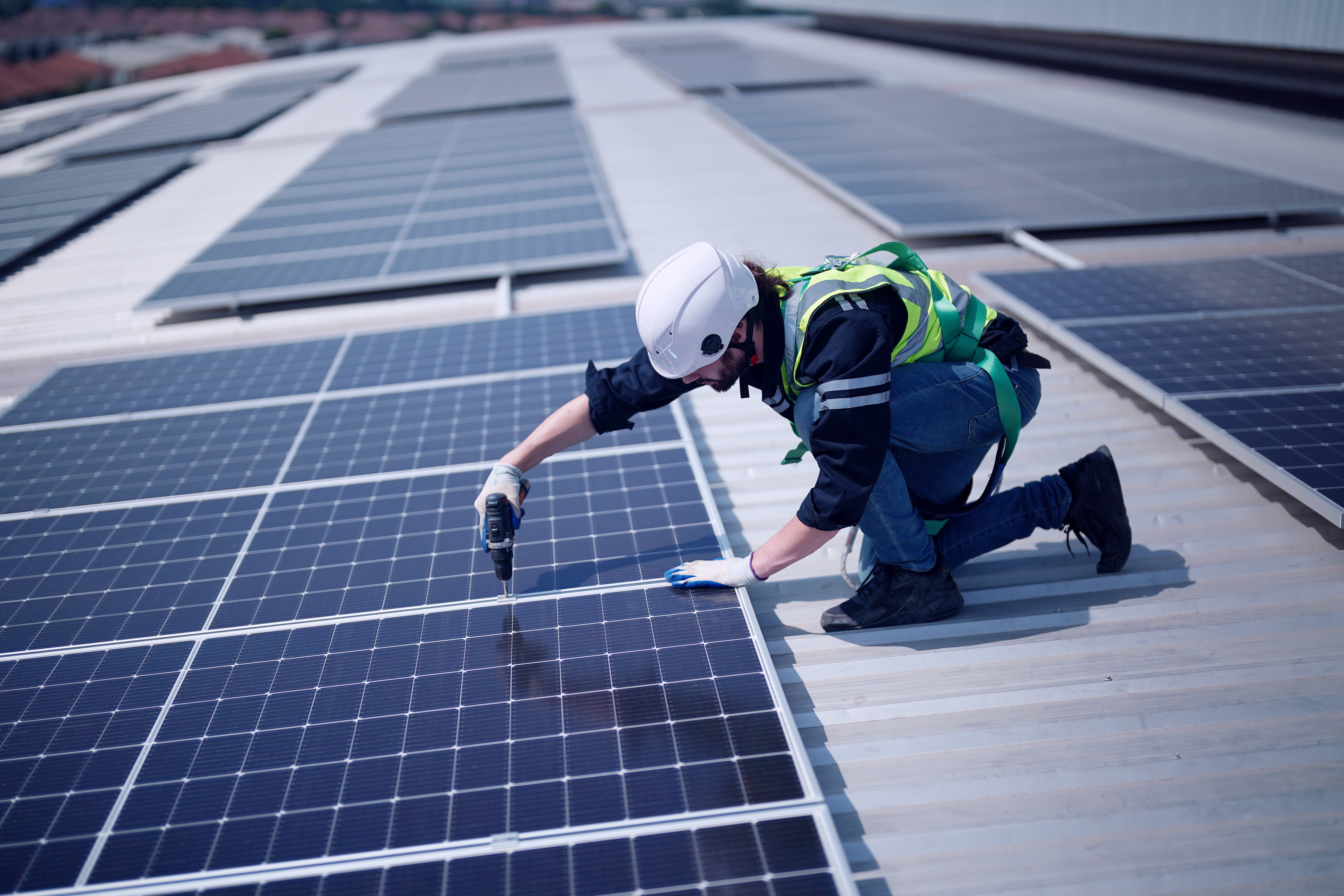
Sharp Services joined Secaro’s Clean Heat Program at the request of its customer, AstraZeneca. In a recent conversation hosted as part of the program, Hywel Woolf, Sharp’s Global Sustainability Lead, and David Wilson, UK Site Director, spoke candidly about where Sharp’s own decarbonization work stands. Sharp set 2023 as its carbon baseline, and has since moved from early-stage disclosure to validated SBTi targets, built sustainability into its capital expenditure process, and invested significantly in its UK facility, including solar generation and electrified HVAC systems.
Company profile
Sharp Services is a leading provider of commercial packaging, clinical services, and sterile manufacturing to pharma and biopharma customers, with sites across the UK, Europe, and North America. The company published its first sustainability report in 2025, and has a net zero target for 2050.
Key takeaways
- Sharp’s UK solar project had a 3.1-year payback, a conservative estimate based on six weeks of generated data.
- The UK project has already offset more than £36,000 in energy bills within its first six weeks of operation.
- 44% of the UK site’s annual energy now comes from renewables.
- Every capital expenditure request at Sharp now requires a sustainability justification, whatever the size or purpose of the project.
- A proposed North American solar project had a 20-year payback period, so Sharp decided not to pursue it.
- Scope 1 and 2 emissions are well understood across the business. Scope 3 remains the hardest part of the journey.
- Asked what they’d change, both leaders gave the same answer: not the strategy, but the timeline. David Wilson said simply that he’d have started earlier. Hywel Woolf agreed, noting an earlier baseline and SBTi commitment would have put Sharp further along today.
- Sharp is shifting focus towards facility-by-facility capital planning, building on recently completed energy assessments, with the explicit goal of moving from reporting and measurement toward implementation.